
Updated October 14, 2026
Could opportunity village work in Eureka? Open ai was tasked with formulating a plan based on the success of opportunity village.
1. What Opportunity Village is
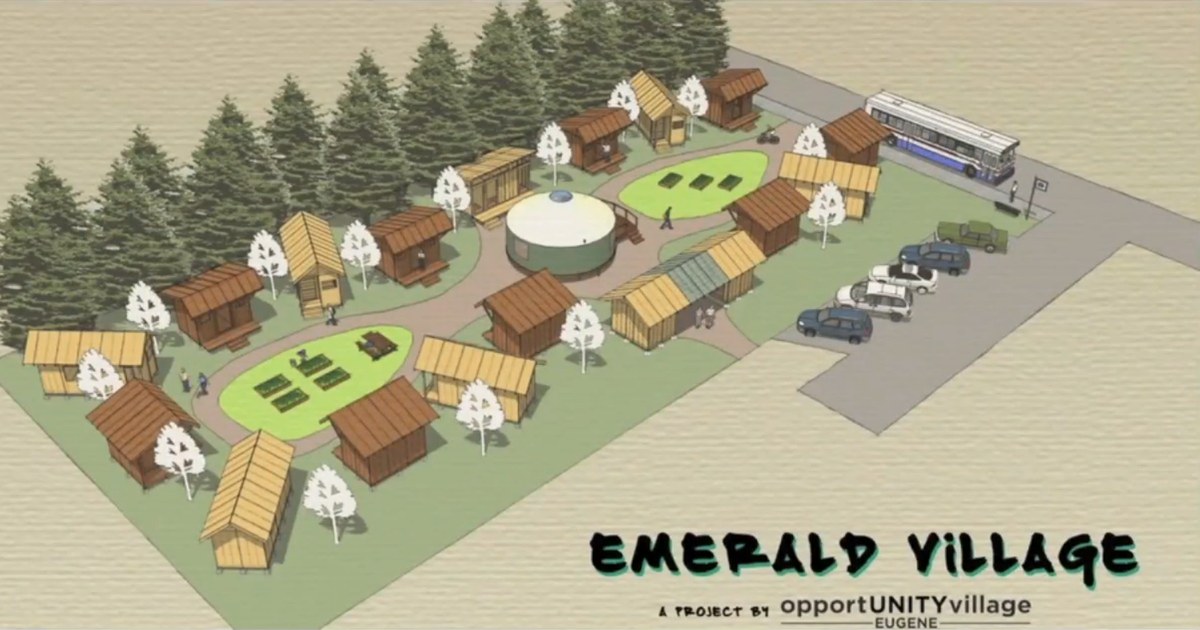
The video “Building Opportunity Village” shows a small village of tiny homes for people who have no housing.
- What it is: A transitional village. “Transitional” means a safe, temporary stepping stone between the street and a real home.
- How it started: Eugene held a city task force on homelessness in 2011. A group of regular citizens kept pushing afterward. They formed a nonprofit in July 2012. That nonprofit is now called SquareOne Villages.
- The land: The City of Eugene provided about one acre of land. A written contract with the city sets the rules for using it.
- The building: Volunteers and future residents built the homes in 2013. Churches, businesses, and neighbors donated materials and labor. They built the first 5 homes in one day. The whole village took about 9 months.
- Cost to build: Each tiny home cost about $2,000 in materials (2013 prices).
- Who lives there: About 30 to 35 adults. Children are not allowed.
- Shared spaces: A shared kitchen, bathrooms, laundry, and workshop.
- How it is run: The residents run it themselves. This is called self-managed. They follow a written “Community Agreement” (house rules) and hold a monthly village meeting. The nonprofit gives oversight and support.
- Cost to run: About $45,000 a year (2017), or roughly $3 to $5 per person per night. Residents paid $30 a month toward utilities.
- Neighbors: A Eugene city councilor said he received zero complaints about it.
2. Where Eureka stands now (October 2026)
Bayside Village (Hilfiker Lane)
- About 32 small units, built by the Betty Kwan Chinn Homeless Foundation.
- Betty Chinn chose not to renew her contract. The City took over on May 15, 2026.
- It is now run by Uplift Eureka, a city program. Open Door Mobile Medical comes on site.
New shelter at 16 Second Street (Old Town)
- 40 beds in small factory-built sleeping units from LIT Homes (Portland).
- Paid for with a private donation of about $2.9 million.
- On October 6, 2026, the Council approved a construction contract of about $699,000.
- Planned to open in early 2027.
- News reports differ on who will run it day to day (the Betty Kwan Chinn Foundation or the City through Uplift).
The City’s ad hoc committee on shelter options
- An ad hoc committee is a temporary working group made for one job. It formed in 2025.
- Members: Councilmembers Renee Contreras-DeLoach and G. Mario Fernandez, City Manager Miles Slattery, mental health clinician Jacob Rosen, CAPE Project Manager Jeff Davis, and Chief Building Official Brendan Reilly.
- On April 7, 2026, they reported on villages in Portland, San Rafael, and Sacramento.
- The option they liked best: Conestoga Huts. These are small, insulated, hard-shell huts with a locking door. About $4,500 built, or about $2,500 as a kit.
- Hurdle: California treats these huts like tents, which brings different zoning and accessibility (ADA) rules.
- Several churches said they could host 2 to 5 huts each.
- The Council accepted the report but took no action. The Mayor said the missing pieces are a location, funding, and someone to run it.
History
- In 2014 and 2015, a local group called AHHA (Affordable Homeless Housing Alternatives) pushed for an Opportunity Village–style project here.
- AHHA brought Opportunity Village co-founder Andrew Heben to speak in Eureka.
- The Council voted unanimously then to explore a tiny-house pilot. AHHA’s later proposal was turned down.
The bottom line: Eureka has a city-run village and a new shelter coming. What it does not have yet is a small, resident-run, volunteer-built village like Opportunity Village.
3. A step-by-step plan
Phase 1: Get organized (Months 1–2)
- Write down the 3 things that matter most about the Opportunity Village model.
- Gather a team of 5 to 10 people: a faith leader, a builder, someone who has been homeless, and a neighbor or business owner.
- Check whether AHHA is still active.
- Join the Humboldt Housing & Homelessness Coalition (HHHC) email list.
- Book a first consultation with SquareOne Villages, which helps other towns start villages.
Phase 2: Talk with the City (Months 2–3)
- Ask Councilmembers Contreras-DeLoach and Fernandez where the church-hosted hut idea stands.
- Meet with Uplift Eureka about providing services.
- Ask the Chief Building Official which structures are allowed, and about ADA rules.
- Speak during public comment at a City Council meeting.
Phase 3: Find land and money (Months 3–6)
- Land: Start with churches willing to host a few huts. Also ask about unused City or County land.
- Money: Private donors, local businesses, foundations, and state housing funds such as PLHA and HHAP.
- Write a one-page proposal: site, number of huts, cost, who runs it, and house rules.
Phase 4: Start small (Months 6–12)
- Begin with 2 to 5 huts at one church as a pilot (a small test run).
- Write the house rules with the future residents.
- Hold volunteer build days.
- Track results for 6 months, report to the Council, and grow if it works.
Timing note: Eureka’s election is November 3, 2026. The Mayor’s seat and Wards 1, 3, and 5 are on the ballot, so some contacts may change in December.
4. Who to contact
City Council members can be reached at 707-441-4140 plus their extension, or by the “Email” button on the City’s Meet the Mayor & Council page.
| Name | Role | How to reach |
|---|---|---|
| Kim Bergel | Mayor of Eureka | City website, Meet the Mayor & Council |
| Leslie Castellano | Councilmember, Ward 1 | 707-441-4140 ext. 1 |
| Kati Moulton | Councilmember, Ward 2 | 707-441-4140 ext. 2 |
| G. Mario Fernandez | Councilmember, Ward 3; shelter committee | 707-441-4140 ext. 3 |
| Scott Bauer | Councilmember, Ward 4 | 707-441-4140 ext. 4 |
| Renee Contreras-DeLoach | Councilmember, Ward 5; shelter committee | 707-441-4140 ext. 5 |
| Miles Slattery | City Manager | Eureka City Hall, 531 K Street |
| Jeff Davis | CAPE Project Manager, Uplift Eureka | uplifteureka.com |
| Brendan Reilly | Chief Building Official | Eureka City Hall |
| Betty Kwan Chinn Homeless Foundation | Local shelter nonprofit | Day Center: 707-407-3833, 133 7th St. |
| Humboldt Housing & Homelessness Coalition | Countywide coalition | HHHC@co.humboldt.ca.us |
| Natalie Arroyo | County Supervisor, District 4 | Clerk of the Board: 707-476-2390 |
| Rex Bohn | County Supervisor, District 1 | Clerk of the Board: 707-476-2390 |
| SquareOne Villages | Nonprofit behind Opportunity Village | squareonevillages.org |
| Community Supported Shelters | Makers of Conestoga Huts | communitysupportedshelters.org |
| Building Lives By Building Structure | Hoopa Valley hempcrete builder | blbs.us |
5. Things to keep in mind
- Oregon allows some things California does not. California’s zoning and ADA rules apply here.
- Eugene’s costs are from 2013–2017. Prices are higher today.
- Past sites in Eureka drew pushback from nearby businesses. Early, honest outreach to neighbors helps.
- A few huts that work well can build trust before anything larger.
Sources
- Building Opportunity Village (video)
- SquareOne Villages – Opportunity Village FAQ
- SquareOne Villages – Opportunity Village
- SquareOne Villages – Sustaining Opportunity Village
- Lost Coast Outpost – Eureka Council revisits sanctioned encampment (Apr. 8, 2026)
- Lost Coast Outpost – New shelter coming to Old Town (Oct. 7, 2026)
- KRCR – Eureka takes over Bayside Village
- City of Eureka – Meet the Mayor & Council
- Humboldt Housing & Homelessness Coalition
- North Coast Journal – Big Turnout for Tiny Homes (2015)